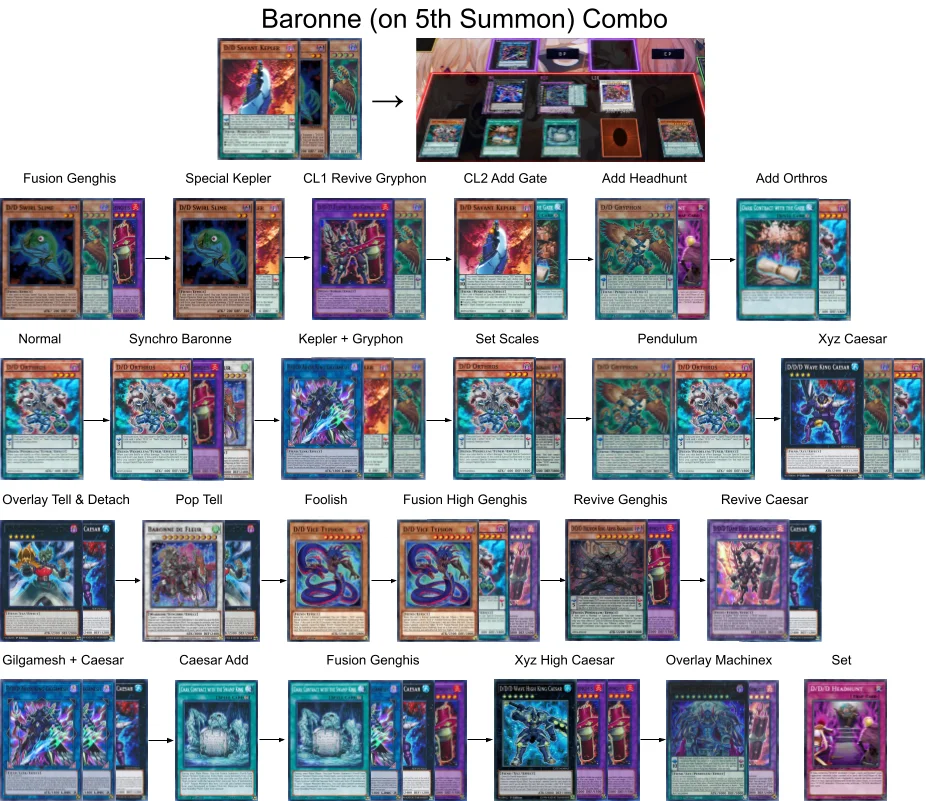
D/D/D, a term synonymous with power and strategy within the Yu-Gi-Oh! universe, stands as one of the most intricate and fascinating archetypes in the game. Whether you’re a seasoned veteran looking to refine your deck or a newcomer eager to dive into the complexities of competitive dueling, understanding the intricacies of D/D/D decks is crucial to mastering the game. This article serves as your comprehensive guide to navigating the D/D/D terrain, ensuring that your deck-building skills and strategic prowess are second to none.
Table of Contents
What does D/D/D stand for in Yu-Gi-Oh?
In the world of Yu-Gi-Oh!, D/D/D signifies “Different Dimension Daemon.” These cards are known for their immense power and ability to access a variety of extra deck summoning methods, including Fusion, Synchro, Xyz, and Pendulum Summons. The D/D/D archetype presents a challenge to players, demanding a deep understanding of game mechanics and strategic foresight.
Each D/D/D card carries its own unique attributes, contributing to a diverse and versatile deck composition that can adapt to numerous battle scenarios. This adaptability makes D/D/D decks a formidable force in the competitive scene.

As Duelists, it’s essential to recognize the strength that lies in the synergy between D/D/D monsters, spells, and traps. This interconnectedness is the lifeblood of the archetype, fueling complex and rewarding plays.
How to optimize your D/D/D deck strategies?
To optimize your D/D/D deck strategies, it’s crucial to balance your deck with an assortment of summoning methods. Keeping a variety of Extra Deck monsters at your disposal ensures that you’re prepared for any situation that might arise during a duel.

Utilizing the different summoning techniques allows for powerful combinations and sequences, giving players the upper hand in tightening the noose around their opponent. Learning to anticipate and counter your opponent’s moves is another cornerstone of mastering D/D/D decks.

Investing time in practicing your combos and understanding the deck’s flow can shift the tides of a duel in your favor. Remember, practice makes perfect, and the more familiar you are with your deck, the better you can execute your strategies.
What are the latest D/D/D support cards?
The release of new support cards is always a highly anticipated event for Duelists. For those specializing in D/D/D decks, recent card releases have bolstered the archetype, providing fresh and dynamic ways to execute strategies.

- New Pendulum cards have been introduced, expanding the scope of summoning capabilities and enabling quicker access to key Extra Deck monsters.
- Updated Fusion monsters bring to the table more offensive and defensive options, making D/D/D decks even more resilient.
- Revamped Trap cards offer enhanced protection and disruption, ensuring that D/D/D Duelists can maintain control of the game state.
Staying updated on the latest support cards and incorporating them into your deck can provide a significant edge in tournaments and casual play alike.
Overview of D/D/D cards and their abilities
The D/D/D archetype boasts an impressive roster of cards, each with its unique abilities that can turn the tide of a duel. Among these, some stand out for their ability to provide consistent advantage and powerful interactions.
D/D/D King Ragnarok, for instance, is a behemoth that can banish an opponent’s monster during either player’s turn. D/D/D Oblivion King Abyss Ragnarok, on the other hand, excels in reviving fallen D/D/D comrades from the grave, setting the stage for relentless assaults.

Other noteworthy cards include D/D Swirl Slime and D/D Necro Slime, both facilitating Fusion Summons to swiftly bring forth your heavy hitters. Their abilities to operate from the hand and graveyard, respectively, make them indispensable components of the D/D/D strategy.
D/D/D deck breakdown and strategies
Building an effective D/D/D deck requires a deep understanding of each card’s role and how it fits into the overarching strategy. A well-constructed D/D/D deck strikes a balance between summoning powerhouses and maintaining resources.

Key cards such as D/D/D Flame King Genghis and D/D/D Gust King Alexander allow for impressive combo chains, enabling you to summon multiple Extra Deck monsters in a single turn. Proper sequencing is paramount to ensure that your plays are not only successful but also resource-efficient.

To excel with D/D/D decks, it’s essential to have contingency plans in place. Whether it’s through protective traps or quick-play spells, having the means to adapt and overcome your opponent’s strategies will secure your victory.
D/D/D appearances in the Yu-Gi-Oh! anime
The D/D/D archetype first carved its place in the hearts of fans through its appearances in the Yu-Gi-Oh! anime. The deck’s use by prominent characters such as Declan Akaba showcased its power and versatility, inspiring players to adopt and master the D/D/D strategy in real life.

The anime serves as a valuable resource for players, offering insights into possible card combinations and inspiring creative approaches to deck building. The portrayal of D/D/D duels captures the excitement and complexity that the archetype is known for.
For those seeking to mimic the anime’s thrilling D/D/D duels, studying matchups and character strategies presented in the show can be a fun and informative method to enhance their own gameplay.
Related questions about mastering D/D/D decks
What does DDDD stand for?
In the context of Yu-Gi-Oh!, DDDD is often a typographical error referring to the D/D/D archetype. The correct abbreviation, D/D/D, stands for “Different Dimension Daemon,” reflecting the theme of monsters from other dimensions with powerful abilities.

Understanding this clarification helps players accurately seek information and strategies related to the archetype, ensuring they are accessing reliable resources to enhance their gameplay.
What is DDD disease?
DDD disease is unrelated to the Yu-Gi-Oh! archetype and does not apply to the context of the game. It is likely a reference to Degenerative Disc Disease, a medical condition affecting the spine.

For clarity, this article focuses exclusively on the strategic elements of the D/D/D archetype in the Yu-Gi-Oh! trading card game.

What’s the difference between DD and DDD?
In Yu-Gi-Oh!, DD refers to “Different Dimension” cards, which is a broader category that includes D/D/D cards. D/D/D cards are a specific subset within the DD category and are distinguished by their comprehensive extra deck summoning capabilities and intricate playstyle.
Understanding the difference between the two is crucial for players when researching and assembling their decks to ensure that they are focusing on the appropriate card interactions and strategies.

When did D/D/D come out?
The D/D/D archetype was first introduced in the Yu-Gi-Oh! trading card game through various booster packs and structure decks over the years. The cards have been released incrementally, with new support and updates continuing to shape the evolution of the archetype.
Keeping track of release dates and new additions to the D/D/D family is important for players aiming to maintain a current and competitive deck.

In conclusion, mastering the D/D/D archetype in Yu-Gi-Oh! demands dedication and a strategic mindset. By staying informed on the latest support cards, practicing your combos, and taking inspiration from resources like the Yu-Gi-Oh! Wiki and Duel Links Meta, you can elevate your D/D/D deck to its maximum potential. Remember to adapt and evolve with the game, and may your duels be ever in your favor.